Menu

EN

A professional headset that just got even more expensive, an AI regulation taking effect in five weeks, and an AI tool that can generate 3D assets in minutes rather than weeks.
This week, several converging signals confirm that immersive technologies and artificial intelligence are becoming a permanent fixture in industrial workflows — whether for team training, equipment maintenance, or showcasing complex products. Here are the four stories worth your attention, and what they mean for your business in practice.
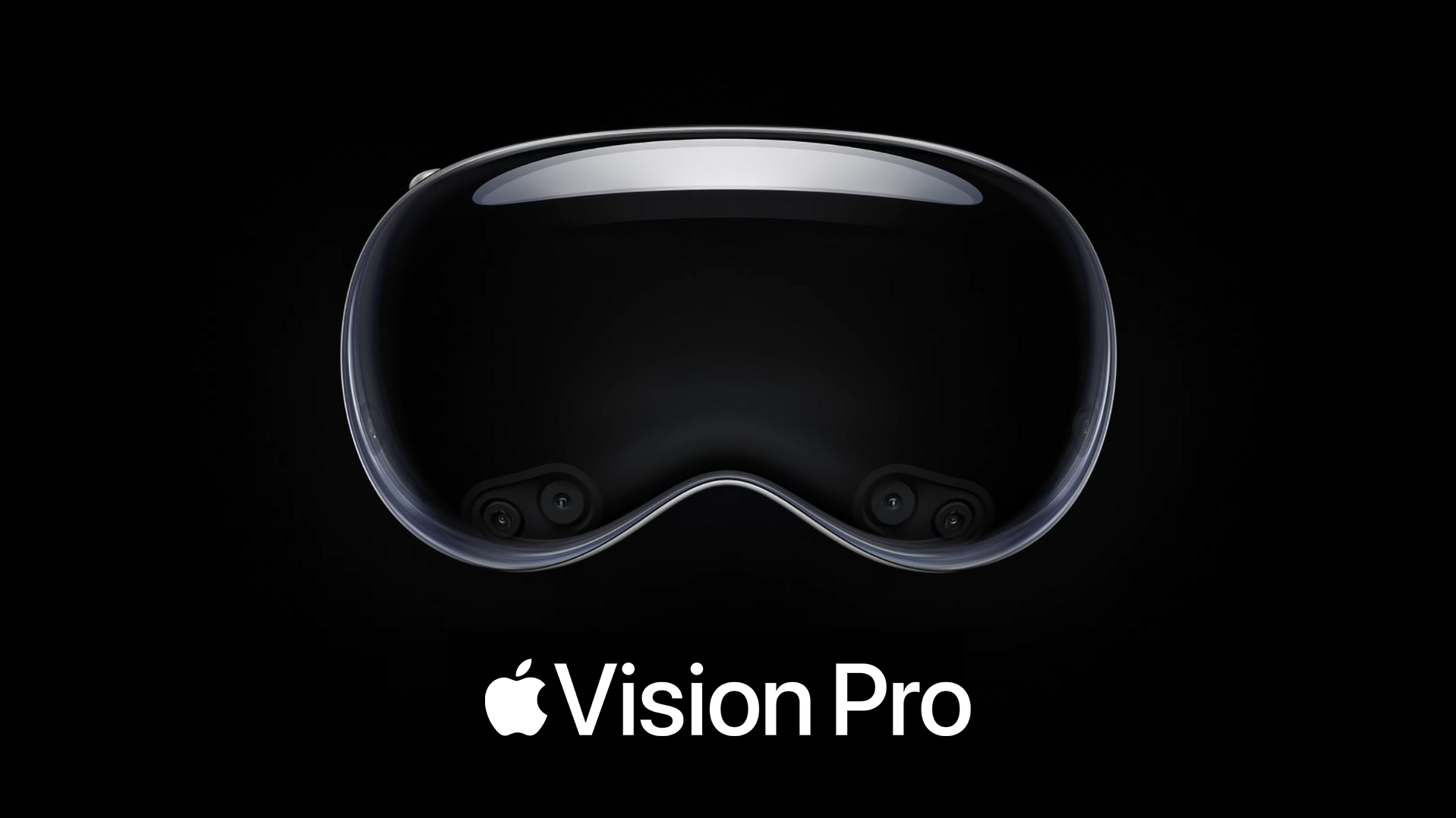
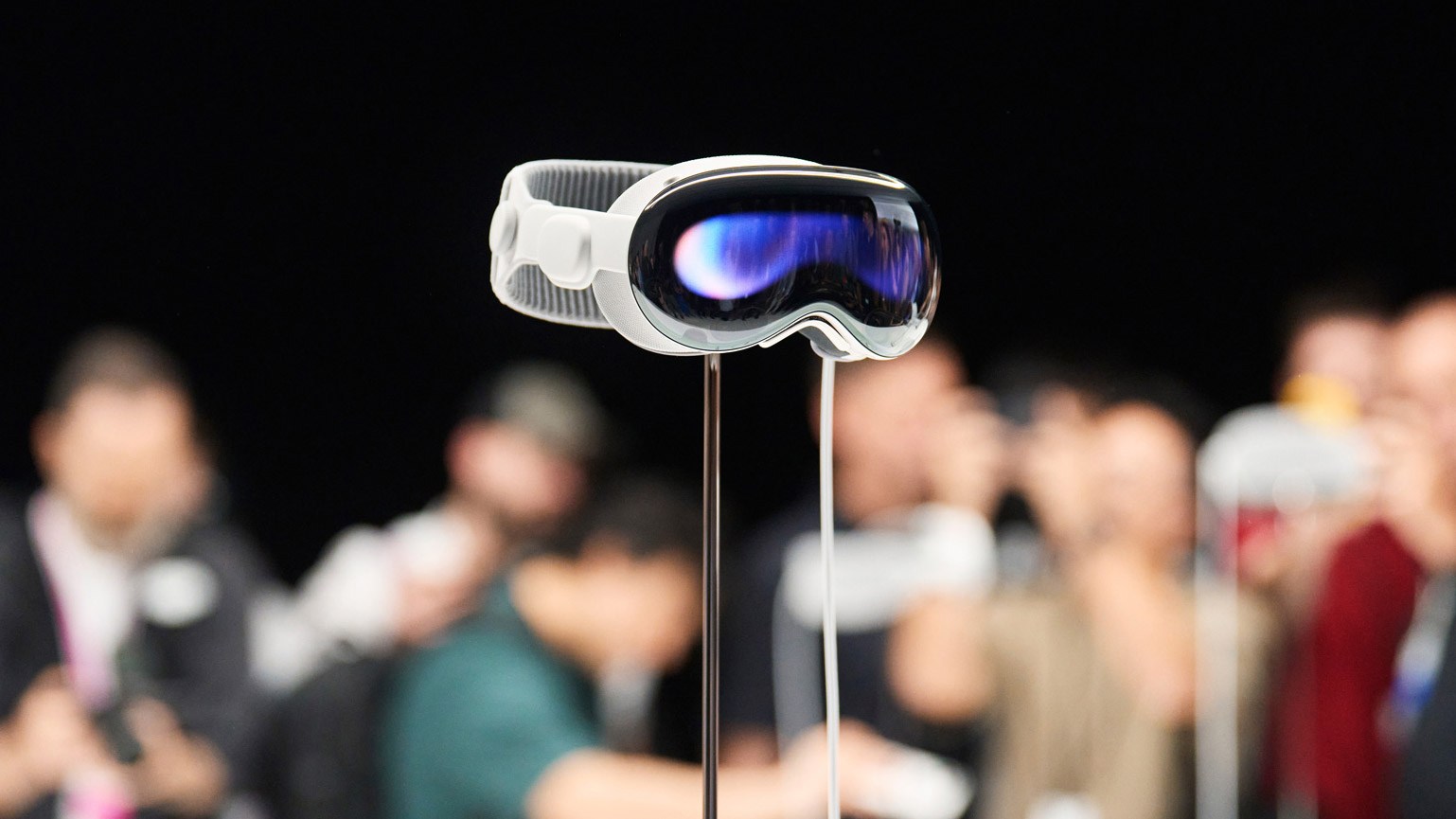
Apple announced this week a $200 price increase on its Vision Pro mixed reality headset, which now starts at $3,700. The reason, cited by Tim Cook himself: a global memory component shortage he describes as "unlike anything I've ever seen." This is not a strategic repositioning — it's a supply chain constraint affecting the entire electronics industry. The headset remains available, but is now even more firmly positioned for high-value applications.
For marketing and R&D teams considering this type of solution for demonstrators or virtual showrooms, the Vision Pro is clearly a prestige tool, suited to specific high-stakes contexts: trade shows, co-design rooms, premium sales presentations. It is not a platform for large-scale deployment. Other platforms — less expensive and equally capable for common industrial use cases — remain far better suited to field training or maintenance. This is exactly what we see with our clients: hardware selection always comes down to the actual use case, not brand appeal.
"Unlike anything I've ever seen" — Tim Cook, on the global memory shortage behind the Vision Pro price increase.

Starting August 2, 2026, the EU AI Act requires that all content generated or manipulated by AI be clearly labeled — images, videos, text, and synthetic voices. In practice, if a 3D animation, a training avatar, or an audio commentary was produced in whole or in part by an AI tool, this must be made visible to the end user. The requirement applies to any organization distributing such content to the public or to employees, including e-learning modules and simulation applications.
For compliance, training, and communications teams, the implications are immediate: any project delivered after August 2 must factor in this requirement from the design phase — not as a last-minute addition. This includes e-learning modules featuring animated avatars, AI-assisted product presentation videos, and synthetic voices used in training applications. The good news: this rule is specific and enforceable. It's not a vague constraint. It simply requires documenting and disclosing what was often left implicit. This is a topic we've been exploring with our industrial clients for several months, and the technical solutions to comply already exist.
From August 2, 2026, any AI-generated content distributed in Europe must be clearly identified as such — a requirement that applies to training modules and immersive applications alike.
💡 This regulatory requirement raises practical questions about your current and upcoming projects: which content is affected, how to identify it, and how to adapt your deliverables?
📩 Talk to a Conseil 3D expert to assess your AI Act compliance before August 2 →
NC AI, a Korean studio specializing in AI for the gaming industry, unveiled this week VARCO 3D 2.0, a tool capable of automatically generating detailed 3D objects from a simple text description or image. Published benchmarks place it ahead of comparable tools currently on the market. According to the company, work that previously took a 3D artist several weeks could now be produced in minutes. The tool is slated for release in July 2026 and has not yet been made available or tested at scale.
For R&D and innovation teams, the promise is compelling: accelerating the creation of early visual prototypes, concept mockups, or product variants to feed co-design workshops or design reviews. The bottleneck until now has been the time and cost of modeling when exploring multiple options. A tool like this could significantly reduce that friction — provided you stay clear-eyed about its current limitations. AI-generated 3D objects are often approximate in their proportions, unoptimized for animation, and rarely ready to drop into a real-time application (VR headset, tablet, WebGL) without cleanup and technical adaptation by an experienced 3D artist. This is a starting point, not a finished deliverable. It's a space we're following closely and actively testing with our own teams.
VARCO 3D 2.0 claims to reduce 3D asset creation "from several weeks to a few minutes" — a claim that will need validation on real industrial use cases when it launches in July 2026.

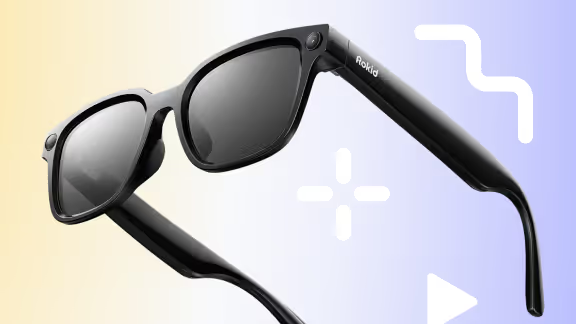
Meta launched this week a new line of smart glasses without the Ray-Ban branding, at a more accessible price point, while retaining the same core features: an AI-powered voice assistant, an integrated camera, and smartphone connectivity. The glasses enable hands-free filming, querying an AI assistant about what you're looking at, and receiving voice-guided instructions. Meta also announced a fast-charging case alongside the launch: 50% battery in 20 minutes, full charge in one hour. These products are already available for purchase.
For maintenance teams and field operators, smart glasses address a very real need: staying hands-free while accessing information, procedures, or remote assistance. Unlike mixed reality headsets, which require an adjustment period and a controlled environment, smart glasses integrate naturally into a technician's day-to-day workflow. One important caveat: these Meta glasses are primarily designed for consumer use. For industrial applications — where data privacy, durability, and integration with existing information systems matter — purpose-built professional solutions remain the right choice, and hardware selection should always come before application design.
With an expanded lineup and a lower price point, Meta is sending a clear signal: AI-enabled smart glasses are no longer a niche gadget — they're a form factor going mainstream.
🔗 Conseil 3D has already done this: Supporting field teams with a holographic guide to simplify complex maintenance operations — hands-free, in real-world conditions. Explore the project →
This week, four signals point to the same reality: immersive technologies and AI are no longer in an exploratory phase — they are entering a normalization phase, with all the implications that brings in terms of technology choices, regulatory compliance, and budget trade-offs. A Vision Pro that costs more, a 3D AI tool promising to compress production timelines, smart glasses dropping in price and reaching a wider audience, and a legal labeling requirement arriving in five weeks: each of these developments points in the same direction.
The functions most directly affected are training (AI Act compliance, immersive simulation), maintenance (field smart glasses), and marketing and R&D (AI-assisted 3D generation, high-end demonstrators). But beyond the technologies themselves, what makes the difference is the ability to match the right tool to the right use case.
💡 Want to identify which of these developments are already actionable in your organization — and which ones are worth waiting on?
📩 Request end-to-end support, from strategic scoping to field deployment →