Menu

EN

The week of June 15, 2026 may well be remembered as the moment connected glasses crossed the line from novelty gadget to serious industrial tool.
Between the announcement of a new processor set to make the next generation of XR headsets and glasses significantly more powerful, the arrival of AI that can understand what you're looking at in real time directly on your eyewear, and a wave of new wearable devices slated for fall, the immersive technology landscape for industry is shifting fast. Here's what it means in practice for your training, maintenance, marketing, and R&D teams.
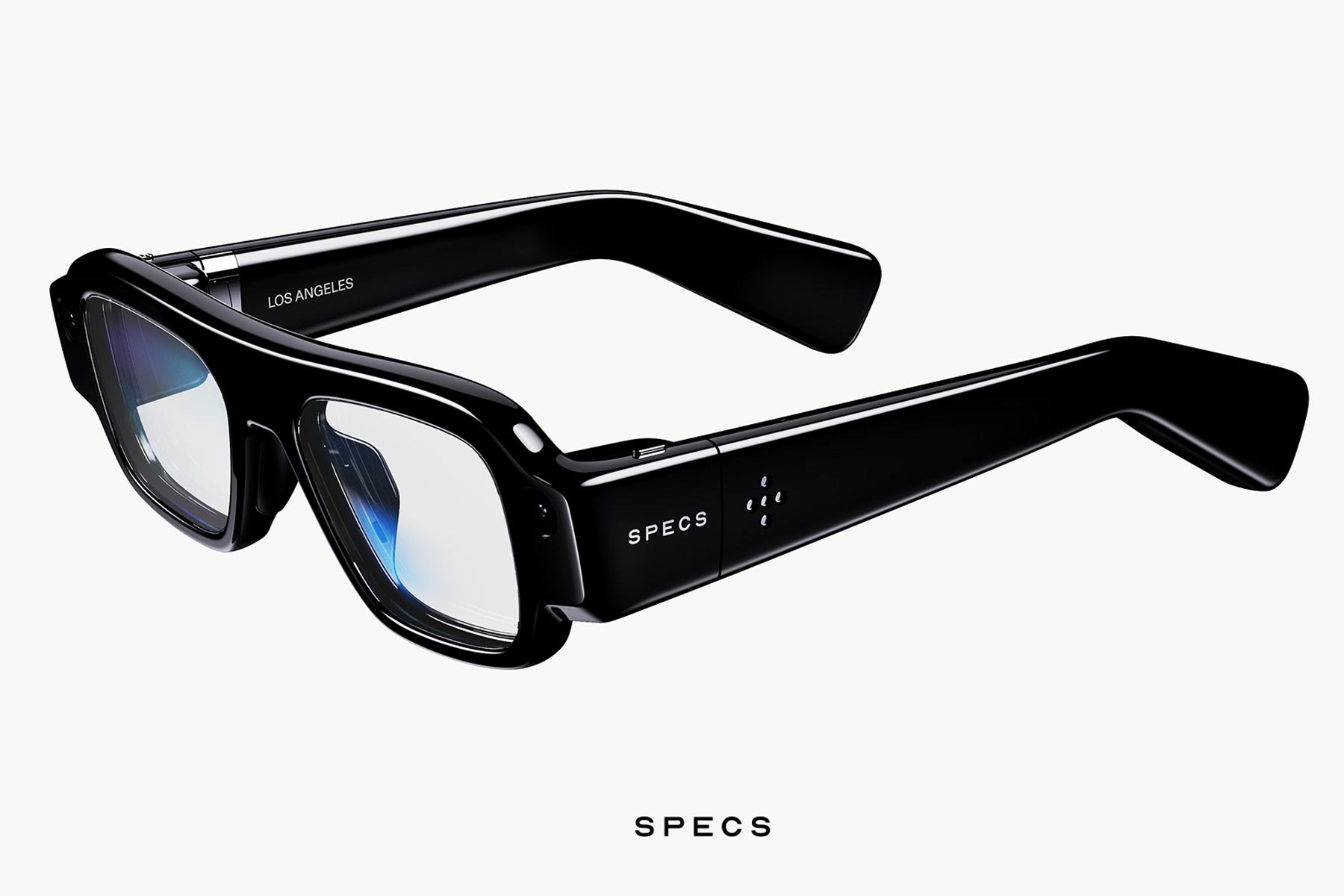
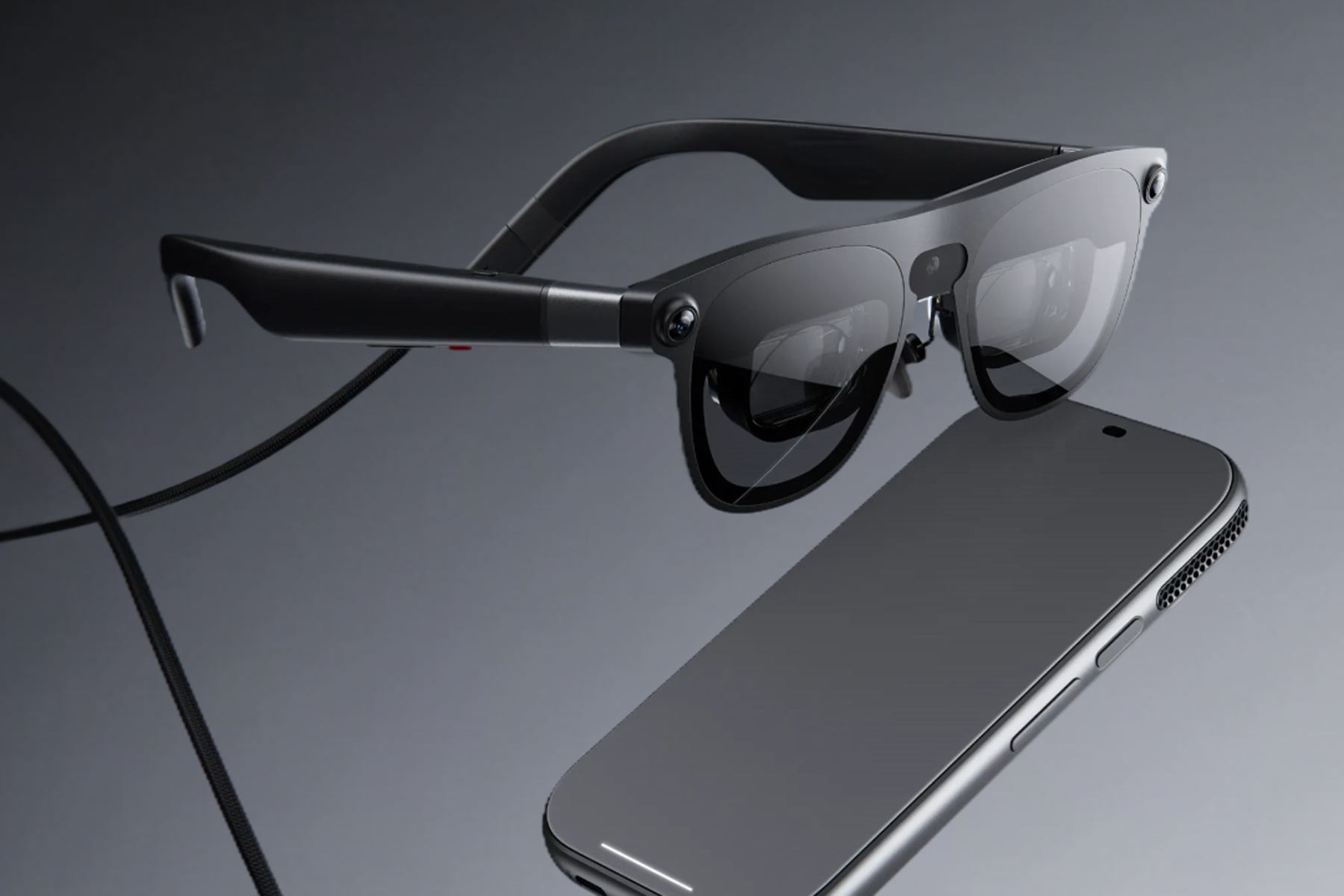
Snap has officially unveiled its first standalone augmented reality glasses — called Specs — priced at $2,195, available for purchase this fall in France, the United States, and the United Kingdom. At the same time, XREAL has announced its Aura glasses for the same timeframe, capped at $1,500. Both devices display genuine digital imagery overlaid on the real world — no cables, no smartphone required.
What this means for your marketing and innovation teams: until now, augmented reality product demonstrations required bulky equipment or handheld tablets and smartphones. Lightweight, standalone glasses open the door to far smoother customer experiences and product showcases — picture a sales rep presenting industrial equipment by overlaying its technical specifications directly in space, without touching a screen. This is territory we're already exploring with several industrial clients, including in the energy and automotive sectors. That said, a dose of realism is warranted: these devices have been announced for fall, but are not yet available or proven under real industrial conditions — field of view, battery life, and ruggedness all remain to be validated.
Two standalone consumer AR glasses announced for fall 2026, both under the $2,200 mark — a price point that opens the door to new professional use cases.
🔗 Conseil 3D has already done it: overlaying product information in augmented reality for field sales teams — discover the project →

At the Augmented World Expo — the world's leading augmented reality trade show — Qualcomm unveiled a new processor built specifically for XR headsets and glasses. Without getting into the technical details, this chip promises more compact, longer-lasting devices capable of running artificial intelligence functions entirely on-device — with no data sent to the cloud. It will power the next generation of Pico headsets and the XREAL Aura glasses announced this week.
What changes on the ground: training and QHSE managers regularly run into a major obstacle — immersive applications require a stable network connection, which is a real problem in sensitive industrial environments (ATEX zones, cleanrooms, nuclear or oil and gas sites). The ability to run intelligent applications entirely on the device, without an internet connection, removes a genuine barrier to deployment in industrial settings. This is a fundamental shift we're watching closely, as it directly determines the feasibility of several projects with our clients in the energy and industrial maintenance sectors. For now, this remains an announcement: commercial availability is expected by late 2026, and real-world performance under industrial conditions has yet to be confirmed.
Artificial intelligence running directly on the headset, with no network dependency: a pivotal development for industrial sites where connectivity is restricted or prohibited.
💡 These new generations of XR hardware raise concrete questions about your current and future deployments.
📩 Request a technology maturity audit for your industrial context →
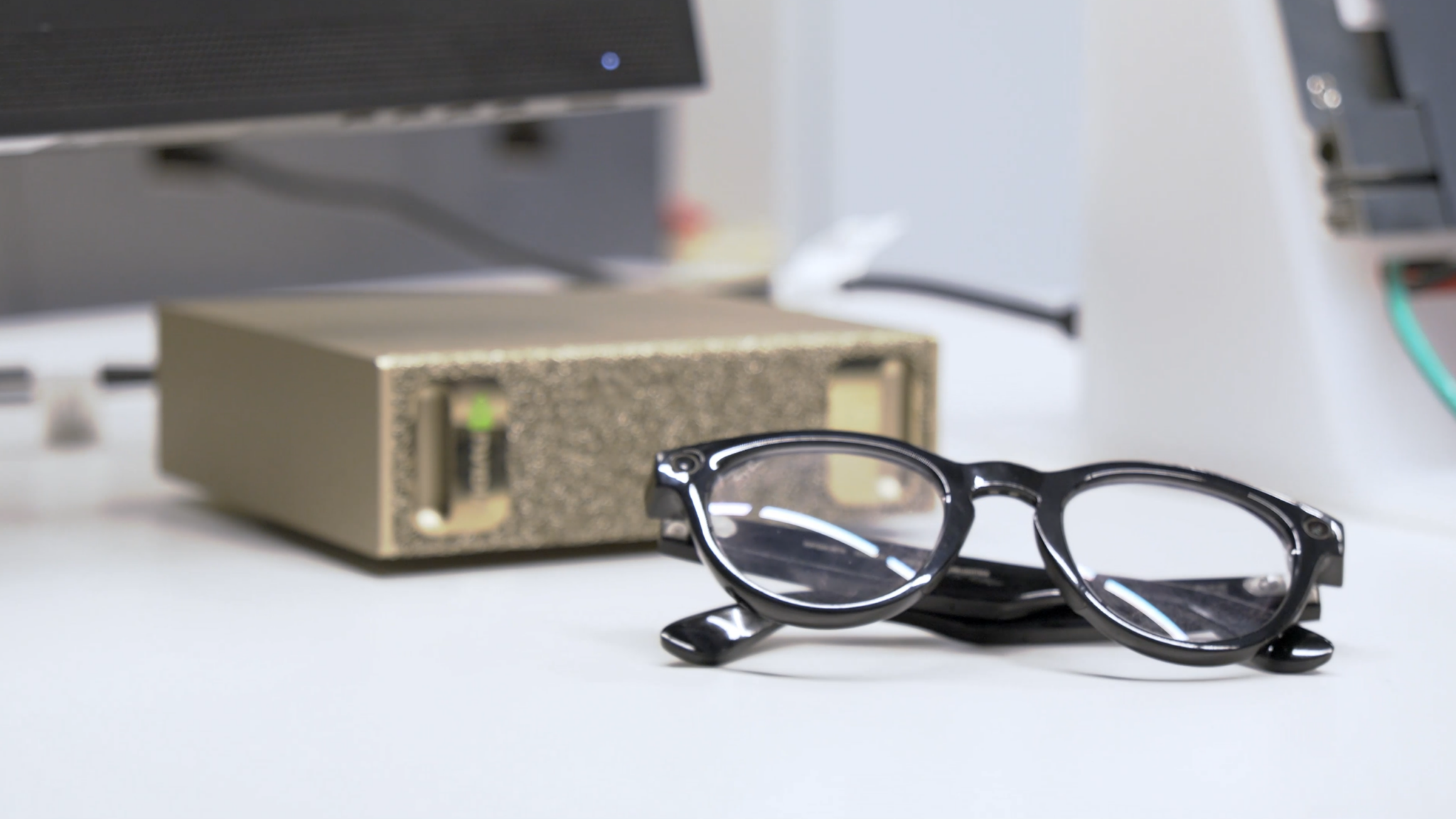
NVIDIA has launched a public beta of a platform enabling developers to build intelligent assistants for connected glasses and XR headsets. In practice, these assistants can see what the operator sees, hear their questions, and respond in real time — identifying a part, spotting an anomaly, guiding a procedure — all displayed directly in their field of view. This is a developer beta, not yet a finished product ready for industrial production deployment.
For your maintenance and QHSE teams, the value is immediate: a technician standing in front of a complex installation can query a visual and voice assistant without leaving their work area, without picking up a phone, without flipping through a manual. The potential gains span both safety (step-by-step guided procedures) and performance (faster incident resolution). The sticking point until now has been that these assistants required a network connection and outsourced computing power — the combination with the new processors announced this week (see previous section) hints at a more robust solution. The timeline for industrial-grade maturity, however, still needs to be defined.
"NVIDIA XR AI is now available in public beta, enabling developers to build multimodal AI agents for AR glasses and XR devices." — NVIDIA Blog
🔗 Conseil 3D has already done it: guiding operators in mixed reality through complex industrial maintenance procedures, with holographic step-by-step overlays — discover the project →
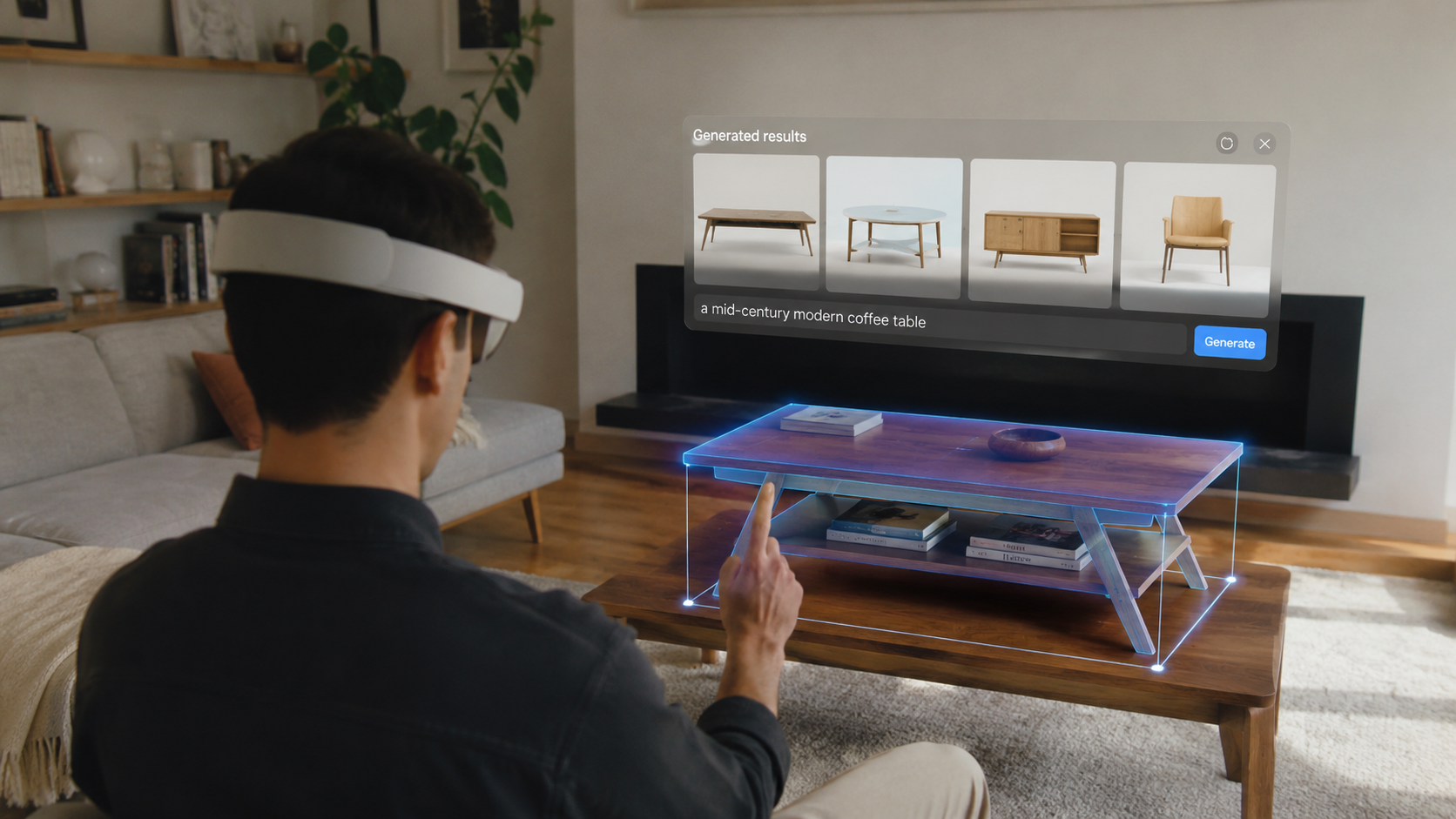
An in-depth article published this week on the Réalité Virtuelle website takes stock of what specialists call "Spatial AI" — in other words, artificial intelligence capable of understanding physical space in three dimensions: locating objects, interpreting their shape, measuring distances, and making sense of a real-world scene. Until now, most AI systems worked exclusively from flat images or text.
For your R&D and innovation teams, this is a structural shift: it opens the door to applications that understand your actual environment in order to overlay useful information onto it — automated quality control on production lines, assembly assistance that detects positioning errors, augmented visualization of digital models. Several of these applications are beginning to move out of the lab and into pilot phases with industrial players, particularly in aerospace and automotive. That said, it would be premature to talk about widespread industrial deployment: precision, robustness under variable lighting conditions, and integration with existing systems remain open challenges. This is an area we're actively exploring with our clients to identify the most realistic near-term use cases.
AI that "understands" physical space in 3D is starting to leave the lab — early industrial pilots are emerging, but large-scale deployments remain on the 2027–2028 horizon.

This week, the European Commission published its Code of Practice on transparency for AI-generated content, as part of the EU AI Act. The text requires, among other things, that companies using AI tools to create content — text, images, videos, 3D simulations — clearly disclose that the content was produced by AI. The first concrete obligations are beginning to apply on a rolling basis, depending on the risk level of the use case.
In practical terms, for your marketing, training, and communications teams: if you are using or considering using generative AI tools to produce materials — training videos, product visuals, scenario simulations — a transparency obligation now applies toward your intended audience. For companies operating in regulated sectors (healthcare, energy, transport), this traceability requirement is a compliance matter not to be underestimated. It's not a paralyzing constraint — it's primarily a call to start documenting your AI usage now, before enforcement kicks in.
The European AI Act is progressively coming into force: companies that produce content using AI must now inform their audiences — an obligation that directly affects training and marketing use cases.
This week marks a turning point in the convergence of XR hardware and artificial intelligence. The next devices — lightweight glasses, compact headsets — will no longer be simple wearable 3D screens: they will become intelligent assistants capable of understanding your environment and responding to it in real time. The question is no longer "does it work?" but "which use cases are genuinely ready for my sector and my constraints?"
The functions most directly affected are training and maintenance (field guidance, error reduction, offline access to procedures), marketing and product showcases (augmented demonstrations at client sites), and R&D and innovation (getting ahead of Spatial AI use cases). Compliance officers should also begin factoring the first AI Act requirements into their content production processes.
💡 These technological developments deserve to be weighed against your real projects — not just your technology watch.
📩 Talk to a Conseil 3D expert to identify the real opportunities in your context →